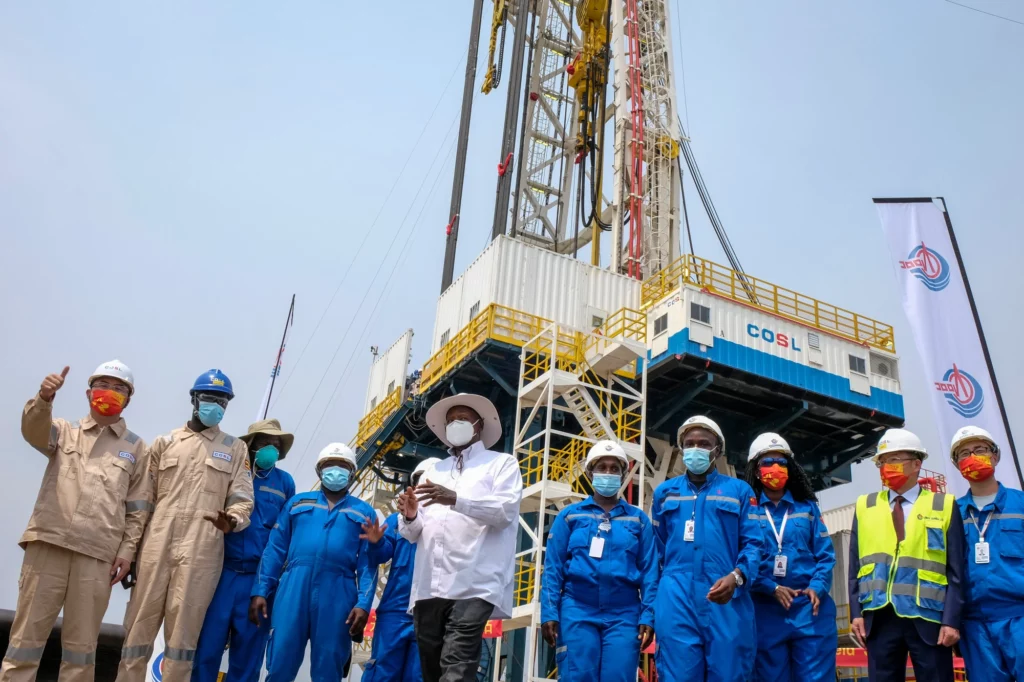
Uganda is facing pushback from environmental groups over its plans to extract oil from Lake Albert, with concerns about the potential impacts on the water access of millions of people who rely on the lake, which spans both Uganda and the Democratic Republic of Congo. According to a statement by the groups, the Kingfisher oil project “puts the water access of millions of people who rely on Lake Albert in Uganda and the Democratic Republic of Congo at risk.”
Ernest Rubondo, executive director of the Petroleum Authority of Uganda, stated that development of the Kingfisher oilfield is expected to cost more than $2 billion over the next three years, with a further $1.63 billion to be spent over the remaining 20 years of its life. At current oil prices of around $87.5 per barrel, the Kingfisher project will account for about 15% of the government’s total oil revenues, earning a total of $6.9 billion, or $360 million per year.
Rubondo also noted that the Kingfisher oilfield is expected to produce 190 million barrels of oil – 33% of its estimated total of 560 million barrels – over the next 20-25 years. Maximum output is estimated at 40,000 barrels per day for five years, after which production will start to decline. Uganda is believed to have an estimated 6.5 billion barrels of crude oil, the equivalent of 1.4 billion barrels of recoverable oil.
The Kingfisher project has been delayed for years due to a number of factors, including disagreements, funding issues, and infrastructure setbacks. Commercially viable oil deposits were first discovered on the shores of Lake Albert in 2006 by British company Tullow Oil. In 2020, Tullow sold its stake in the project to TotalEnergies, which now holds a 56.7% stake in the oilfields. CNOOC holds a 28.33% share, while the Ugandan government holds the remaining 15% via the Uganda National Oil Company.
In February of last year, the three partners announced a $10 billion final investment decision for the Kingfisher project, which includes oilfield development and construction of a pipeline to carry crude oil harvested from beneath Lake Albert and Murchison Falls National Park. TotalEnergies controls a 62% interest in the pipeline, with the Uganda National Oil Company and Tanzania Petroleum Development Corporation each holding 15%. CNOOC holds the remaining 8%.
Despite the significant potential financial benefits of the Kingfisher project, environmental groups are calling on the Ugandan government to consider alternative forms of energy production, such as clean energy, to avoid the potential negative impacts on the water access of millions of people who rely on Lake Albert