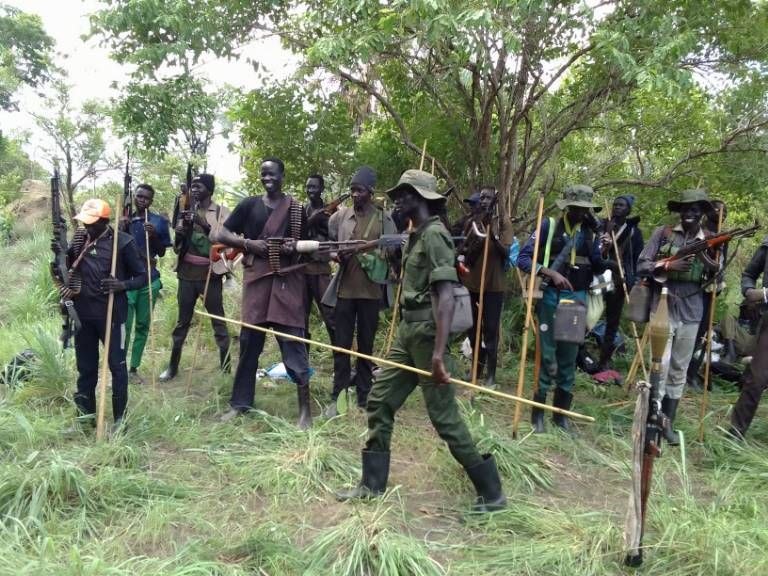
KAMPALA, Uganda, May 30, 2026 — Operation Rescue South Sudan (ORSS) has expressed strong reservations over the ongoing African Union-led peace consultation process for South Sudan, arguing that the initiative risks repeating past mistakes by relying on what it describes as the “same ineffective political players” while excluding actors currently shaping realities on the ground.
In a formal communication dated May 28, 2026, and addressed to former Tanzanian President H.E. Jakaya Mrisho Kikwete, who serves as the African Union High Representative for the Horn of Africa and the Red Sea as well as AU Special Envoy to South Sudan, ORSS outlined concerns regarding the Dar es Salaam peace consultations and their ability to deliver a sustainable political settlement.
The movement acknowledged Kikwete’s diplomatic efforts and longstanding commitment to peace in South Sudan but questioned the inclusivity and relevance of the current consultation framework.
According to the statement, ORSS believes that meaningful peace cannot emerge from a process that continues to elevate political actors whom it blames for repeated failures in previous peace initiatives.
“Sustainable peace and durable political settlement in South Sudan cannot be attained through selective recycling of the same ineffective political players and/or partial engagements with opposition entities,” the movement stated.
At the center of ORSS’s criticism is the composition of participants involved in the Dar es Salaam consultations.
The movement argues that many of the actors currently being engaged have limited influence over ongoing conflict dynamics, while organizations actively involved in security developments inside South Sudan remain excluded or underrepresented.
ORSS maintains that any serious effort to end the conflict must recognize groups with operational presence in conflict-affected regions and include stakeholders whose actions directly influence security, humanitarian access, and political stability.
The organization specifically pointed to areas such as Narus, Nadapal, Kapoeta, and Mundri, describing them as active conflict zones where military confrontations, civilian displacement, and insecurity continue to shape local realities.
According to ORSS, ignoring actors operating in these regions creates what it called a dangerous disconnect between peace negotiations and conditions on the ground.
The movement warned that the current process risks creating perceptions of imbalance and incomplete representation among South Sudan’s warring parties.
Established in March 2025, ORSS describes itself as a coalition bringing together former opposition commanders, SSPDF defectors, community defense groups, youth organizations, elders, opinion leaders, and diaspora networks.
The organization says it emerged in response to what it views as governance failures, insecurity, and the collapse of constitutional order in South Sudan.
Since its formation, ORSS claims to have conducted several military operations, including engagements in Kapoeta, Mundri East, Nadapal, Camp-15, and Narus between September 2025 and January 2026.
The movement argues that its growing military and political influence makes it an indispensable stakeholder in any future peace arrangement.
In its message to Kikwete, ORSS asserted that peace consultations designed to consolidate armed opposition groups would lack credibility if significant actors remain outside the process.
A major theme running through the ORSS statement is frustration with previous peace efforts. The movement cited multiple agreements and initiatives that it says failed to produce lasting peace, including the Arusha SPLM Re-Unification Agreement, the 2015 Agreement on the Resolution of the Conflict in South Sudan (ARCSS), the National Dialogue process, the 2018 Revitalized Agreement (R-ARCSS), the Rome peace talks, the Kitgwang Agreement, and the Tumaini Initiative launched in Nairobi in 2024.
According to ORSS, the repeated collapse or incomplete implementation of these arrangements demonstrates a deeper structural problem within South Sudan’s political settlement process.
The organization argues that continuing to rely on the same political figures who participated in previous agreements is unlikely to produce different outcomes.
For ORSS, the central issue is not merely the signing of another agreement but ensuring that any future process reflects current realities and includes actors capable of influencing implementation on the ground.
Despite its criticism, ORSS emphasized that it is not opposed to the African Union’s mediation efforts.
The movement described its intervention as a constructive appeal for broader participation and a more comprehensive approach to conflict resolution.
It urged the AU and regional mediators to design a framework that accommodates all credible stakeholders rather than limiting consultations to established political elites.
ORSS stated that durable peace, democratic transition, constitutional governance, civilian protection, and genuine national reconciliation can only be achieved through a process perceived as inclusive and representative.
The movement reiterated its willingness to participate in future negotiations, provided that the process is structured in a manner that recognizes emerging actors and addresses what it views as the shortcomings of previous peace initiatives.
As the African Union intensifies efforts to consolidate opposition groups and revive dialogue among South Sudanese stakeholders, the concerns raised by ORSS are likely to add to an already complex debate about representation, legitimacy, and the future direction of peace efforts in the world’s youngest nation.
Whether regional mediators will adjust the consultation framework to accommodate such demands remains to be seen, but the statement underscores a growing challenge facing peace brokers: how to balance established political actors with emerging forces that increasingly influence realities on the ground.
The EAC Post – May 30, 2026